
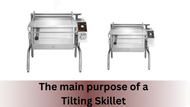
The main purpose of a Tilting Skillet
A 40-gallon gas tilting skillet (often called a braising pan) is widely considered the "Swiss Army knife" of a commercial kitchen.
Primary Purpose & Versatility
The main purpose of a tilting skillet is to handle bulk food preparation efficiently.
-
Braising & Stewing: Ideal for searing large cuts of meat and then simmering them in liquid for hours (e.g., pot roast, carnitas).
-
Grilling & Searing: The flat bottom works like a high-output griddle for burgers, pancakes, or browning hundreds of chicken thighs at once.
-
Boiling & Simmering: Acts as a massive stockpot for soups, chilis, pasta, and sauces.
-
Steaming: With the lid closed (and optional pan inserts), it becomes a high-capacity steamer for vegetables and rice.
-
Frying: Can be used for shallow pan-frying of items like fried chicken or schnitzel.
A 40-gallon unit is the largest standard floor model, typically serving high-volume environments like schools, hospitals, hotels, and large restaurants.
-
High Throughput: A single 40-gallon skillet can produce between 640 and 850 servings (6-oz) per hour, making it a "force multiplier" for small kitchen crews.
-
Safe Liquid Transfer: The tilting mechanism (either manual hand-crank or electric) allows chefs to pour out gallons of hot liquid safely into containers without the risk of heavy lifting or spills.
-
Even Heating: Unlike a stockpot on a range, the entire bottom surface is heated by gas burners (usually 100,000 to 200,000 BTU), eliminating hot and cold spots.
-