
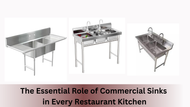
The Role of a Commercial Sink in Your Restaurant Equipment Lineup
In any successful restaurant, cleanliness, hygiene, workflow efficiency, and compliance with health codes are fundamental. One of the often-overlooked yet absolutely essential pieces of commercial restaurant equipment is the commercial sink—specifically designed for the rigors of a food-service kitchen. Whether you are outfitting a new space or upgrading your kitchen, especially in a competitive market like Dallas, you are likely exploring suppliers of restaurant equipment Dallas and may even consider the value of used restaurant equipment Dallas. Understanding the importance and functions of a commercial-grade sink is key to making a smart investment.
What is a Commercial Sink?
A commercial sink is a sink unit built for food-service environments: heavy-duty stainless steel construction, multiple compartments (often one, two, three, sometimes more), drainboards, deep bowls to accommodate large cookware, faucets and spray fixtures suited for constant use. These sinks are part of the broader category of commercial restaurant equipment that ensures your kitchen can handle volume, meet sanitation requirements and maintain efficiency. Ultimate Restaurant Equipment+2JES Equipos de Restaurante+2
For restaurants seeking restaurant equipment Dallas, selecting the right sink—both in capacity and configuration—can impact operations significantly.
Key Functions & Uses
A commercial sink serves many critical functions in a restaurant environment:
-
Washing, rinsing, and sanitizing: In many jurisdictions the food-service code mandates a three-compartment sink for manual dishwashing of utensils, pots and pans. One compartment for washing, one for rinsing, one for sanitizing. California Water Efficiency Partnership+1
-
Prep sink functionality: A dedicated sink for food preparation tasks—washing vegetables, seafood, or other raw items—helps prevent cross-contamination and improves workflow.
-
Hand-washing sink: Many health departments require a separate hand-washing sink conveniently located in food-preparation or service areas. Salud Pública del Condado de Greene
-
Mop or janitorial sink: Another specialized sink for floor cleaning, mop-water disposal, etc., separate from food-prep and dish-washing zones to maintain cleanliness.
-
Drainboards and large capacities: Commercial sinks often include large drainboards to stage dishes or cookware, and deeper basins to hold large stockpots or sheet-pans. texasrestaurantequipment.com+1
-
Durability and hygiene: High-grade stainless steel, breakout free corners, and easy-to-clean surfaces reduce downtime, harbour fewer bacteria, and withstand heavy use. RestaurantSupply.com
Why It’s Useful for Restaurants
When you include quality commercial sinks within your overall lineup of commercial restaurant equipment, you reap multiple benefits:
1. Compliance & Cleanliness
Food-service regulations require proper sinks for washing, sanitizing, hand-washing, etc. Failure to meet these requirements can lead to health-department citations or closures. Having the right commercial sink ensures you are compliant, protecting the restaurant and brand. Especially when sourcing restaurant equipment Dallas, make sure your sink configuration meets local Dallas health-code requirements.
2. Efficiency in Workflow
In a busy kitchen, time is money. With a well-designed sink station (for dish-washing, pre-rinsing, hand-washing, food-prep), staff can move smoothly, reducing lag, avoiding bottle-necks. A commercial sink with multiple compartments and drainboards allows simultaneous activity: one team prepping, another washing, another sanitizing. This contributes to faster turnaround, cleaner operations, and fewer service delays.
3. Space & Resource Optimization
Rather than ad-hoc or residential sinks that may not be up to the task or may take multiple stations, investing in proper commercial sinks means you optimize your footprint and reduce maintenance headaches. In the Dallas market, looking at used restaurant equipment Dallas options can make this upgrade more accessible—getting commercial-grade sinks at lower cost. But be sure used units still meet sanitary condition and local code.
4. Menu & Volume Flexibility
If your restaurant is scaling up for catering, banquet service, or heavy dinner volume, you’ll need sink stations that can handle large pots, large numbers of utensils, multi-step washing flows. A premium commercial sink offers capacity and flexibility to accommodate menu changes or increased volume. As part of your commercial restaurant equipment plan, it’s wise to future-proof your kitchen with the right sink infrastructure.
5. Longevity & Return on Investment
A good commercial sink is low-tech but high-value: fewer moving parts, long lifespan, simple to maintain. Compared to other high-cost equipment (ovens, fryers, etc.), a sink is modest but essential—and one that can serve reliably for many years if built robustly. If you choose a quality unit (even used), your return on investment comes via fewer breakdowns, less downtime, and consistent operations.
Considerations When Buying
When shopping for a commercial sink (whether new or used, especially if you are sourcing in Dallas and comparing “restaurant equipment Dallas” or “used restaurant equipment Dallas”), keep the following in mind:
-
Number of compartments: If you manually wash pots and pans, you’ll likely need a 3-compartment sink (wash / rinse / sanitize). For prep-only, 1- or 2-compartment may suffice. JES Equipos de Restaurante+1
-
Size and depth of bowls: Bowls need to be deep and wide enough for your biggest pans or sheet-pans. Drainboards should be sizeable. texasrestaurantequipment.com
-
Material & finish: Stainless steel (18-gauge or heavier, type 304) is standard. Look for smooth welds, coved corners, easy-to-clean surfaces. Ultimate Restaurant Equipment
-
Drainboards, splash-guards, backsplashes: Important for hygiene and workflow. Many sinks now include drainboards which help staging. gatorchef.com
-
Faucets & sprayers: Pre-rinse spray units, hands-free faucets, durable mixing valves are important for busy kitchens.
-
Local code compliance: Ensure sink meets your city’s health codes (Dallas has its own health department regulations) and NSF/ETL certification. Salud Pública del Condado de Greene+1
-
Used equipment inspection: If buying used (used restaurant equipment Dallas), check for rust, pitting, damage, loosened welds. While cost-effective, used needs proper scrutiny. > “One of the reasons why buying cheap commercial kitchen equipment isn’t such a good idea … you will end up spending more money in the long run.” Reddit
-
Plumbing & drain capacity: A commercial sink uses large volumes of water for wash/rinse/sanitize. Ensure drainage, venting, trap size are sufficient.
-
Layout & ergonomics: A sink station should be placed for effective workflow—near dish-pit, near prep, near janitor area as appropriate. Adequate space around for staff movement matters.
-
Maintenance & cleaning: Sinks should allow easy access for cleaning the undersides, drains, and around fixtures. Quality build reduces hygiene risk and maintenance cost.
Why Specifically Important in the Dallas Market
When we talk about restaurant equipment Dallas, the region is competitive with many restaurants, catering operations, food trucks, and high-volume food service. Investments in foundational infrastructure—like proper sink stations—are especially important to keep operations smooth and compliant. Moreover, the local market for used restaurant equipment Dallas gives you access to good-condition commercial sinks at lower cost—ideal when you’re remodeling or starting up on a budget. However, you must still ensure the used sink meets Dallas health code and is in proper sanitary condition.
Example Scenario
Imagine a mid-sized restaurant in Dallas that runs full lunch and dinner service plus event catering. They realize the current dish-sink setup (a simple residential sink) is insufficient—slow, too shallow for their stockpots, lacking drainboards, creating delays. They decide to upgrade to a 3-compartment commercial sink with dual drainboards and deep bowls, custom-sized for their volume. They locate a used commercial sink unit through a local Dallas dealer of used restaurant equipment Dallas, inspect it carefully (no rust, good stainless steel, proper legs and drains), and install it adjacent to their dish-pit. After the upgrade, dishwash flow is faster, pots drain properly, staging on drainboards is efficient, and the staff can clean and sanitize faster—reducing downtime and improving workflow. The investment forms part of their broader commercial restaurant equipment upgrade.
Conclusion
A commercial sink is one of the foundational elements of your commercial restaurant equipment lineup. While it may not be as glamorous as your oven or grill, its importance cannot be overstated—for hygiene compliance, workflow efficiency, menu volume handling, and long-term reliability. For restaurants in Dallas looking at their list of restaurant equipment Dallas items or exploring used restaurant equipment Dallas options, make sure the sink is given proper weight in your planning: choose capacity, design, material and configuration intelligently. With the right commercial sink, you’ll support your daily operations more effectively and set your kitchen up for cleanliness, speed, and operational success.