
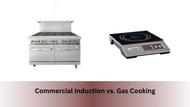
Commercial Induction vs. Gas Cooking
Evaluate commercial induction cooktops vs traditional gas open burners regarding energy efficiency, thermal transfer, and kitchen comfort.
For decades, open gas flames were considered the non-negotiable benchmark for professional kitchens. However, rapid advancements in heavy-duty commercial induction technology are disrupting traditional line layouts. Deciding whether to transition from gas to induction requires evaluating thermal efficiency, line safety, and long-term utility overhead.
Thermal Efficiency: Analyzing Energy Waste
The primary distinction between gas combustion and magnetic induction lies in how heat energy is generated and transferred into your cookware:
-
Commercial Gas Burners: Deliver a thermal transfer efficiency of only 35% to 40%. Over 60% of the energy produced by the open flame escapes into the surrounding ambient air, heating up the kitchen envelope instead of the food.
-
Commercial Induction Hobs: Achieve an incredible 85% to 90% thermal efficiency. High-frequency electromagnetic fields induce heat directly within the ferromagnetic base of the pan itself. The cookware effectively becomes the heating element, bringing liquids to a boil in half the time of gas.
Direct Workplace and Operational Advantages
-
Dramatically Cooler Kitchen Environment: Eliminating open flame heat radiation significantly lowers kitchen ambient temperatures, reducing staff fatigue and cutting commercial HVAC cooling loads.
-
Enhanced Safety and Rapid Cleanup: Without red-hot grates or open flames, skin burn risks are minimized. Smooth glass-ceramic cooktop surfaces wipe clean in seconds, cutting hours off end-of-night closing shifts.
-
Precision Temperature Control: Induction offers digital wattage control, enabling cooks to maintain precise holding and simmering temperatures for delicate emulsions, sauces, and chocolates.