
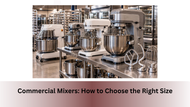
Commercial Mixers: How to Choose the Right Size
How to Choose the Right Commercial Mixer
Choosing the right commercial mixer depends on what you prepare, how much you produce, and how frequently you use the machine. Restaurants, bakeries, pizzerias, and catering businesses may need different mixer types and capacities.
A commercial planetary mixer is a versatile option for many mixing tasks, including cake batter, frosting, mashed potatoes, and some doughs. A spiral mixer is designed primarily for mixing dough, making it worth considering for bakeries and pizzerias with substantial dough production.
Before purchasing a mixer, compare its intended applications, rated capacity, available attachments, electrical requirements, safety features, and overall condition.
Texas Restaurant Supply sells new and used commercial restaurant equipment. Contact our Arlington store to ask about current mixer availability.
What Are the Different Types of Commercial Mixers?
Understanding the differences between mixer types can help you select equipment that suits your kitchen.
1. Planetary Mixers
Planetary mixers use an attachment that rotates around a stationary bowl. Depending on the model and attachment, they can handle a variety of mixing tasks.
Common applications include:
-
Cake batter and baking mixtures
-
Frosting and whipped mixtures
-
Mashed potatoes
-
Cookie dough
-
Some bread and pizza dough recipes
Many planetary mixers use interchangeable attachments, such as a flat beater, wire whip, and dough hook. The attachments available depend on the model.
A planetary mixer may be a good choice for restaurants and bakeries that need one machine for several different preparations.
2. Spiral Mixers
Spiral mixers are designed primarily for dough production. The mixing action is intended to develop dough efficiently, making these machines useful for operations that regularly produce bread or pizza dough.
Consider a spiral mixer if dough is your primary product and your production volume justifies dedicated equipment.
A spiral mixer is not automatically the best option for every kitchen. If your business also prepares cake batter, frosting, and other mixtures, compare its capabilities with those of a planetary mixer before deciding.
What Size Commercial Mixer Do You Need?
The correct mixer size depends on the amount and type of product you prepare per batch.
Commercial mixers are often described by bowl capacity in quarts. However, bowl volume does not tell you how much dough a mixer can safely or effectively handle.
Dough capacity varies by machine, recipe, dough consistency, and manufacturer specifications.
| Kitchen or Business | What to Consider |
|---|---|
| Café or small food business | Batch sizes, available space, and frequency of use |
| Restaurant | Variety of mixing tasks and daily production |
| Bakery | Dough type, batch weight, and production schedule |
| Pizzeria | Dough capacity and number of batches per shift |
| High-volume food operation | Production requirements, durability, and workflow |
A 20-quart mixer and a 40-quart mixer are not interchangeable simply because they both mix food. The larger unit may be unnecessary for small batches, while the smaller unit may not meet the needs of a high-volume operation.
Important: Check the manufacturer's capacity chart for your particular recipe. Never assume that a bowl can be filled to its maximum volume with dough.
Planetary Mixer vs. Spiral Mixer
Use this comparison to narrow down your options.
| Feature | Planetary Mixer | Spiral Mixer |
|---|---|---|
| Primary purpose | Multiple mixing applications | Dough preparation |
| Typical attachments | Beater, whip, dough hook, depending on model | Dough-focused mixing mechanism |
| Common users | Restaurants, bakeries, cafés | Pizzerias and bread bakeries |
| Versatility | Generally greater for different mixtures | Specialized for dough |
| Main buying consideration | Attachments and batch capacity | Dough capacity and production needs |
Choose the mixer based on the work it will perform most often. For a kitchen that makes cakes, frostings, and occasional dough, a planetary mixer may be more versatile. For a business producing large quantities of pizza or bread dough, a spiral mixer may be more appropriate.
Should You Buy a New or Used Commercial Mixer?
Both new and used commercial mixers can be suitable, depending on your budget and requirements.
A new mixer may offer manufacturer warranty coverage and access to current product specifications. A used mixer may cost less initially, but its condition, service history, and remaining useful life need careful evaluation.
Before purchasing a used mixer, check the following:
-
Motor operation: Ask whether the machine has been tested at its available speeds and under appropriate operating conditions.
-
Attachments: Verify which bowls, beaters, whips, and dough hooks are included.
-
Safety features: Check the bowl guard, interlocks, emergency stop, and other safety mechanisms where applicable.
-
Mechanical condition: Look for unusual noise, excessive vibration, damaged components, or signs of poor maintenance.
-
Specifications: Confirm voltage, phase, electrical requirements, dimensions, and available installation space.
-
Service and warranty: Ask whether maintenance records, warranty coverage, or return options are available.
Do not purchase a mixer based on appearance alone. Have a qualified technician evaluate any mechanical or electrical concerns when necessary.
What Brands and Features Should You Compare?
Commercial mixer brands include manufacturers such as Hobart, Globe, and Univex. The appropriate choice depends on the model, application, capacity, serviceability, and budget.
When comparing specific machines, consider:
-
Rated mixing capacity for your intended recipe.
-
Available speeds and attachments.
-
Bowl-lift design and ease of operation.
-
Safety guards and controls.
-
Electrical requirements and installation space.
-
Availability of replacement parts and qualified service.
-
Purchase price, warranty terms, and maintenance costs.
Brand recognition alone does not guarantee that a mixer is the right fit for your business. Compare individual models and their specifications before purchasing.
Where Can You Find a Commercial Mixer?
If you are looking for a commercial mixer for a restaurant, bakery, or pizzeria in the Dallas–Fort Worth area, contact Texas Restaurant Supply to ask about current inventory.
Texas Restaurant Supply — Arlington
3114 S Cooper St.
Arlington, TX 76015
Phone: 682-252-4020
Before visiting, ask whether a mixer is currently available, what model and capacity it has, which attachments are included, and whether its condition and warranty terms have been verified.
Inventory changes, so availability should be confirmed directly with the store.
Frequently Asked Questions
What is the difference between a commercial and a home stand mixer?
Commercial mixers are designed for foodservice applications, with specifications that vary by model and intended workload. Before buying, compare rated capacity, duty requirements, available attachments, safety features, and the manufacturer's guidance for your intended use.
What size commercial mixer is best for a small bakery?
The best size depends on your batch weights, recipes, production schedule, and available space. Calculate your typical and largest batches, then compare them with the manufacturer's rated capacity rather than relying on bowl volume alone.
Is a planetary mixer or a spiral mixer better for pizza dough?
Both may be suitable for some dough applications, but they serve different purposes. Planetary mixers offer greater versatility across mixing tasks, while spiral mixers specialize in dough preparation. Compare the machine's rated dough capacity with your recipe and production volume.
Is a used Hobart mixer worth buying?
A used Hobart mixer may be worth considering if its condition, capacity, included attachments, and price meet your needs. Verify the model, test its operation when possible, and ask about service history, warranty coverage, and potential repair costs.
What should I check before buying a used commercial mixer?
Inspect the motor, controls, bowl, attachments, guards, and overall mechanical condition. Confirm the electrical requirements and ask whether the mixer has been tested. Also verify which accessories are included and whether any warranty or return policy applies.
Where can I buy a commercial mixer near Fort Worth, TX?
Texas Restaurant Supply serves the Dallas–Fort Worth area from its Arlington location at 3114 S Cooper St. Call 682-252-4020 to ask about current commercial mixer inventory and specifications.
Find the Right Mixer for Your Kitchen
The best commercial mixer is one that matches your recipes, batch sizes, production volume, and budget. Compare planetary and spiral models, verify the manufacturer's capacity specifications, and evaluate the machine's condition before purchasing.
Contact Texas Restaurant Supply in Arlington at 682-252-4020 to ask about available commercial mixers and other restaurant equipment for your business.