
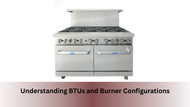
Commercial Range Buyer's Guide: Understanding BTUs and Burner Configurations
Master commercial range selection by evaluating BTU heat output, open vs. solid top burners, and integrated custom configurations.
The commercial range is the undisputed anchor of the hot line. Whether your culinary team is flash-searing steaks, reduction-simmering delicate sauces, or boiling high-volume stocks, the productivity of your line depends heavily on heat output and top-plate configurations. Selecting the right commercial restaurant ranges requires a clear understanding of technical heating specifications.
Demystifying BTU Heat Ratings
BTU (British Thermal Unit) measures the precise thermal output of a burner element. Higher BTU ratings mean faster pan heat-up times and quicker thermal recovery when cold ingredients hit hot surfaces:
-
Standard Commercial Burners: Typically produce between 28,000 and 30,000 BTUs per open burner, supplying ample power for standard sautéing and pan-frying.
-
Heavy-Duty High-Output Burners: Range from 32,000 to 40,000+ BTUs per burner. These are engineered for heavy stock pot boiling, intense wok searing, and rapid high-volume cooking.
Open Burners, Integrated Griddles, and Space Optimization
Modern range chassis design allows operators to combine multiple cooking mediums onto a single footprint:
-
Open Cast-Iron Burners: Deliver direct flame contact to cookware bottoms for instant thermal adjustment and rapid flame response.
-
Integrated Griddle Tops: Manufacturers offer hybrid top plates that replace 12, 24, or 36 inches of open burners with a flat steel griddle plate. This allows line cooks to sear burgers, fry eggs, or toast buns on the same unit.
-
Salmander Mounts: Installing an elevated infrared salamander or cheese melter on the range backraiser utilizes dead vertical space, granting line cooks immediate access to finishing and broiling elements.