
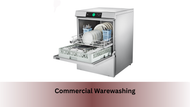
Commercial Warewashing: Choosing Between Door-Type, Conveyor, and Undercounter Dishwashers
Compare undercounter, door-type, and conveyor commercial dishwashers to optimize your kitchen's warewashing footprint and rack capacity.
The dish pit is the unsung engine room of every foodservice venue. When clean plates, glassware, or silverware stop flowing back to the dining room, ticket execution comes to a sudden halt. Selecting the right commercial restaurant dishwashers ensures code-compliant sanitation while minimizing utility costs, water consumption, and labor bottlenecks.
Hourly Rack Capacity and Throughput
The primary metric for selecting a warewashing setup is the volume of dish racks your kitchen processes during peak dining rushes:
-
Undercounter Dishwashers: Similar in dimensions to residential models but built with rapid 90-to-120-second commercial wash cycles. They process roughly 20 to 35 racks per hour. These are ideal for coffee shops, bars, or boutique cafes with tight spatial footprints.
-
Door-Type / Pass-Through Dishwashers: The standard workhorse for full-service dining establishments. Featuring a spring-loaded hood door, they process 35 to 60 racks per hour and pair seamlessly with stainless steel clean and dirty dishtables.
-
Conveyor Dishwashers: Engineered for high-volume institutions, hotels, and banquet halls. A motorized continuous belt pulls racks through designated pre-wash, wash, and final rinse chambers, handling anywhere from 150 to over 400 racks per hour.
Sanitation Mechanics and Dish Pit Ergonomics
Beyond raw capacity, your kitchen layout and utility infrastructure dictate the right machine choice:
-
High-Temp Thermal vs. Low-Temp Chemical Sanitation: High-temp units leverage internal booster heaters to reach 180°F (82°C) during the final rinse, causing clean dishware to flash-dry within seconds without chemical residue. Low-temp units rely on metered sanitizing chemicals with standard tap water, drawing lower electrical power.
-
Dishtable Workflow Integration: Pass-through and conveyor systems require adequate linear footprint for soiled sorting tables, pre-rinse sinks, and clean drying tables so staff can rack and unload without jamming the line.