
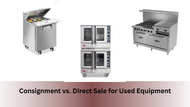
Consignment vs. Direct Sale for Used Equipment
Weigh restaurant equipment consignment vs buyout options to maximize financial recovery or secure instant building clearance.
Whether you are updating your hot line, changing culinary concepts, or liquidating a facility, the capital tied up in your pre-owned commercial equipment represents significant financial value. When divesting these assets, operators generally choose between two primary exit paths: auction consignment or a direct cash buyout. Selecting the optimal strategy depends on your lease timeline and cash flow urgency.
Auction Consignment: Maximizing Gross Asset Value
Consignment involves transferring your machinery to a specialized equipment liquidator or auction platform that markets and sells the items on your behalf.
-
Key Advantages: Consignment captures true open-market competitive pricing for each individual asset. Rather than accepting a discounted bulk price, buyers compete for specific lots, driving higher gross financial returns for high-demand, well-maintained equipment.
-
Timeline Factors: Consignment requires a longer promotional runway. Cataloging, photographing, running the auction event, and processing final buyer payouts typically spans over a multi-week timeframe.
Direct Cash Buyouts: Instant Liquidity and Fast Building Clearance
A direct cash buyout occurs when an equipment buyer purchases your entire equipment package in a single transaction and manages the physical extraction from the building.
-
Key Advantages: Total speed and transaction certainty. You receive an immediate cash payment, and the buyer assumes full operational responsibility for disconnecting, rigging, and hauling heavy machinery out of the venue. This is the optimal solution when facing strict lease termination deadlines.
-
Timeline Factors: The upfront purchase price will be lower than potential auction yields, as the buyer assumes the long-term holding costs, storage overhead, and resale risk.