
Designing Stations to Prevent Cross-Contamination
Protect your customer base and secure perfect health department scores by configuring your layout with the correct commercial food prep tables.
Food safety is the non-negotiable backbone of any reputable commercial foodservice operation. A single high-profile cross-contamination event can dissolve your brand's reputation overnight and invite severe regulatory penalties. While comprehensive staff training is vital, your primary line of defense begins with the physical architecture of your kitchen workspace. Organizing your prep line using the correct commercial food prep tables is critical to isolating operational risks long before food reaches the dining room.
Implementing Strict Spatial Separation on the Line
Cross-contamination occurs when dangerous pathogenetic bacteria or allergens migrate from raw proteins (like poultry or seafood) over to ready-to-eat components that receive no further cooking (like salad greens or sandwich buns). Your kitchen's workflow layout must mandate a strict, one-way path for your raw ingredients:
-
Dedicated Raw Protein Zones: These preparation surfaces must remain isolated from final plating areas. Position heavy-duty, standalone stainless steel prep tables strictly for butchering and portioning meats. Always pair these zones with color-coded cutting boards (e.g., red for red meat, yellow for raw poultry) to reinforce safety boundaries.
-
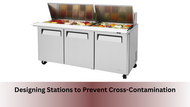
Refrigerated Prep Tables (Sandwich & Mega-Top Prep Rails): These specialized units keep your cold toppings and garnishes held at food-safe thresholds below 40°F (4°C). Featuring insulated drop-in wells and protective roll-top hoods, they completely shield your cold inventory from accidental splashes or airborne particles generated near your hot line or dishwashing zones.
Designing a Sanitary Stainless Steel Workflow
Avoid cluttering your prep layout. Ensure your floor plan leaves wide corridors of movement so kitchen staff processing raw products don't continuously cross paths with cooks running the line or plating desserts. Designing a smart, linear workflow over smooth, commercial-grade stainless steel surfaces allows your back-of-house crew to perform rapid, deep-sanitation wipe-downs between shifts. This guarantees your workspace stays hygienic, highly efficient, and constantly prepared to pass local health inspections.