
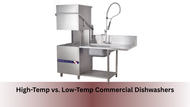
High-Temp vs. Low-Temp Commercial Dishwashers
A head-to-head comparison between high-temperature and chemical restaurant dishwashers. Find the most efficient sanitation system for your dish room.
The dish room is the unsung engine room of any high-volume foodservice operation. If clean plates, flatware, and glassware stall in the back-of-house, your entire table turnover grinds to a halt. When investing in a commercial dishwasher, your primary decision will center on the sanitation mechanism: high-temperature or low-temperature (chemical) sanitation. While both systems guarantee code-compliant clean ware, their operational footprints differ greatly.
High-Temperature Dishwashers: Sanitation Through Thermal Energy
High-temp warewashers rely strictly on scorching water temperatures to eradicate surface bacteria and pathogens. These units require a final rinse cycle that hits at least 180°F (82°C), a threshold that typically necessitates a dedicated internal or external booster heater to scale up standard tap water heat.
-
The Advantages: Extreme heat effortlessly cuts through heavy animal fats and proteins without leaving chemical films behind. Because the ceramic and glass absorb this intense heat, dishes flash-dry via rapid evaporation almost immediately upon exiting the machine, accelerating inventory cycle times.
-
The Disadvantages: They demand a higher electrical load to sustain water temperatures, leading to larger utility bills. They also generate continuous hot steam, meaning local building codes will generally require a Type II ventilation hood installed directly above them.
Low-Temperature Dishwashers: Chemical-Driven Sanitation
Low-temp appliances run on standard hot tap water (usually between 120°F and 140°F) and rely entirely on metered chemical sanitizing agents—such as liquid sodium hypochlorite (bleach)—injected into the final rinse cycle to secure sanitation compliance.
-
The Advantages: These units feature lower upfront purchase costs and draw significantly less power, saving on immediate utility installation requirements. They rarely require dedicated ventilation hoods, saving kitchen square footage.
-
The Disadvantages: Operators face ongoing, fixed monthly costs for chemical replenishment. Over time, heavy chlorine exposure can dull fine dinnerware patterns and etch delicate crystal or glassware. Additionally, because the wares emerge cool, ambient air-drying takes substantially longer.
Weighing your glassware volume, physical space constraints, and long-term utility budget will point you toward the ideal warewashing asset to keep your front-of-house flawlessly supplied.