
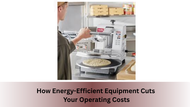
How Energy-Efficient Equipment Cuts Your Operating Costs
Learn how choosing energy-efficient commercial kitchen equipment can drastically lower your monthly utility bills and boost your restaurant's bottom line.
When managing a restaurant, fixed overhead costs can quickly become the biggest hurdle to maintaining healthy profit margins. Between rent, payroll, and inventory, the continuous energy and water consumption of a commercial kitchen is often one of the highest—and least controlled—expenses. Shifting toward an energy-efficient setup is far more than an eco-friendly trend; it is a smart financial strategy designed to cut operating costs immediately.
The Financial Power of Energy-Certified Appliances
Commercial kitchens house heavy-duty appliances that run continuously for hours on end. Commercial refrigeration units, for instance, operate 24/7 to keep your inventory safe. Upgrading to modern units featuring high-efficiency compressors and advanced insulation ensures that the motors don't work overtime to maintain safe holding temperatures, resulting in a direct reduction in your monthly electric bill.
Similarly, next-generation commercial fryers and convection ovens are engineered to optimize heat transfer. These systems reach cooking temperatures faster and boast rapid recovery times between batches. This means your kitchen consumes significantly less gas or electricity without sacrificing speed of service during your busiest dinner rushes.
A Verifiable Return on Investment
While energy-efficient commercial kitchen equipment may carry a slightly higher upfront cost compared to outdated or budget-grade alternatives, the return on investment (ROI) becomes clear within the first few billing cycles. By lowering utility consumption—from water usage in dishwashing stations to power on the hot line—the money saved on utility bills quickly offsets the initial expenditure. This leaves your restaurant with a leaner, more competitive, and more profitable operation over time.