
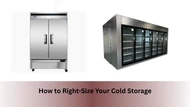
How to Right-Size Your Cold Storage
Compare space footprints, volumetric storage costs, and workflow efficiency between commercial walk-in coolers and reach-in units.
Maintaining an unbroken cold chain is the foundation of food safety and inventory preservation. However, deciding whether to outfit your kitchen with vertical commercial reach-in refrigerators or to invest in a modular walk-in cooler requires careful space planning and financial evaluation. Assessing your volume turnover, floor footprint, and prep flow will dictate the proper cold storage setup.
Reach-In Refrigerators: Point-of-Use Accessibility
Standard 1, 2, or 3-door reach-in units position cold ingredients immediately adjacent to line cooks and prep stations.
-
Operational Pros: They occupy a predictable footprint, require no specialized building permits or structural modifications, and can be repositioned during kitchen reorganizations. They excel at staging active line inventory for rapid service execution.
-
Operational Cons: Their usable volumetric storage relative to their floor footprint is limited compared to walk-ins. Frequent door openings during rush hours cause rapid internal air warming, forcing compressors to cycling frequently.
Walk-In Coolers: Bulk Storage and Low Volumetric Cost
A walk-in cooler or freezer is an insulated modular room that enables staff to physically walk inside to store, organize, and retrieve bulk inventory.
-
Operational Pros: It delivers a much lower cost per cubic foot of usable storage space once inventory needs exceed basic thresholds. Wall-to-wall commercial shelving allows for clear FIFO (First In, First Out) stock management and stable ambient temperature preservation.
-
Operational Cons: Requires a permanent structural footprint, dedicated electrical supply lines, remote condenser positioning, and higher upfront capital installation costs.
If your venue processes substantial bulk food orders and holds sufficient back-of-house square footage, a walk-in cooler provides superior long-term ROI. For compact kitchens prioritizing immediate ingredient access right on the hot line, high-efficiency reach-ins remain the standard.