
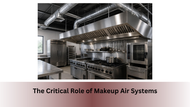
The Critical Role of Makeup Air Systems
Avoid negative pressure and thermal imbalances. Discover how commercial kitchen makeup air systems protect your HVAC and airflow.
When engineering a commercial kitchen ventilation system, operators naturally focus on the exhaust hood’s ability to pull grease, heat, and smoke out of the building. However, exhausting thousands of cubic feet of air per minute without injecting fresh air back into the space creates severe pneumatic imbalances. Understanding how a makeup air system functions is vital to maintaining operational efficiency and protecting your building’s HVAC infrastructure.
Understanding the Hazards of Negative Air Pressure
When a Type 1 or Type 2 commercial exhaust hood continuously draws air out of a sealed building envelope without dedicated replacement air, the space experiences negative air pressure.
-
Door Lock and Mechanical Resistance: Negative pressure forms a vacuum effect inside the building, making exterior doors heavy and difficult for guests and staff to push open or pull shut.
-
Infiltration of Unfiltered Air: The building will forcefully draw replacement air through any unsealed crack, window, or electrical penetration, pulling raw outdoor humidity, dust, and pests directly into your prep zones.
-
Combustion Gas Backdrafting: Gas-fired appliances relying on natural draft flues can suffer from backdrafting, where dangerous combustion byproducts—such as carbon monoxide—are pulled back into the kitchen instead of exiting the flue.
The Engineering of a Balanced Makeup Air System
A makeup air unit (MAU) is a dedicated roof-mounted or wall-mounted supply fan that mechanically pumps clean, filtered outdoor air back into the kitchen, replacing roughly 80% to 90% of the air removed by the exhaust hood.
To prevent the incoming air stream from disrupting internal climate control, modern units utilize tempered makeup air systems that heat or cool the incoming air. Delivering tempered air directly to the hood footprint prevents your dining room’s commercial AC units from overworking, significantly reducing monthly utility bills.